


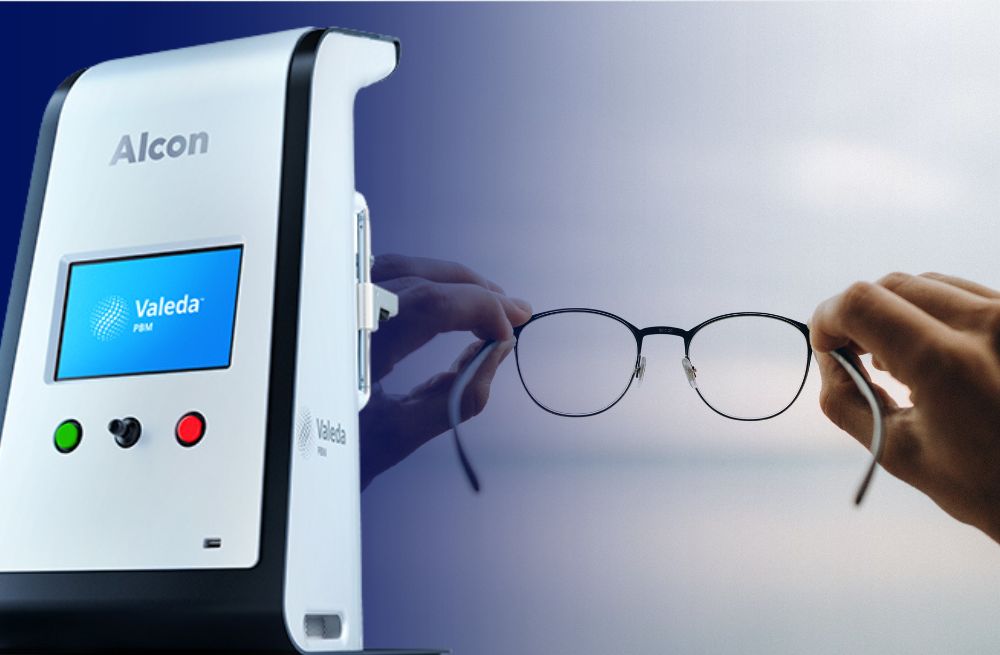
11 Sep Red Light Therapy to Slow Nearsightedness
Nearsightedness, or myopia, has reached unprecedented levels globally, particularly among young children and adolescents whose eyes are still developing. While traditional single-vision eyeglasses correct blurred distance vision, they do not prevent the eye from continuing to elongate over time. Recent clinical advances in pediatric ophthalmology have highlighted repeated low-level light exposure, widely recognized as Red Light Therapy to Slow Nearsightedness, as a novel photobiomodulation strategy. By delivering targeted light energy to the posterior structures of the eye, this non-invasive approach aims to stabilize ocular growth and preserve long-term visual health.
The Mechanism of Axial Elongation in Progressive Myopia
Myopia typically develops when the eyeball grows too long from front to back, a physical metric measured as axial length. When axial length increases excessively, light entering the eye focuses in front of the retina rather than directly on its surface, causing distant objects to appear blurry. Beyond the immediate inconvenience of requiring stronger optical prescriptions each year, rapid axial elongation stretches delicate retinal tissues. High axial myopia significantly elevates the lifetime risk of developing serious ocular complications later in life, including retinal detachment, myopic maculopathy, and early-onset glaucoma. Controlling axial elongation during childhood growth spurts is therefore a critical priority in modern preventive eye care.
How Red Light Therapy to Slow Nearsightedness Works at a Cellular Level
Photobiomodulation therapy utilizes specific wavelengths within the visible red spectrum, typically around 650 nanometers, emitted at low power levels. When light photons penetrate the ocular media and reach the back of the eye, they interact directly with the vascular and metabolic layers supporting the retina. Research indicates that this targeted light absorption initiates a cascade of beneficial cellular responses that signal the eye to stop expanding.
Photobiomodulation and Subfoveal Choroidal Thickening
The choroid is the dense vascular layer situated between the sclera and the retina, responsible for delivering oxygen and nutrients to the outer retinal cells. In myopic eyes, the choroid frequently thins out, leading to localized tissue hypoxia and accelerated scleral stretching. Red Light Therapy to Slow Nearsightedness works by stimulating mitochondrial activity within choroidal cells, specifically targeting the respiratory enzyme cytochrome c oxidase. This absorption enhances cellular adenosine triphosphate (ATP) production, boosts microcirculation, and promotes significant subfoveal choroidal thickening.
Suppressing Scleral Hypoxia and Axial Growth
When choroidal blood perfusion improves, oxygen levels within the surrounding scleral matrix increase significantly. Elevated oxygenation suppresses the cellular signaling pathways that trigger scleral remodeling and tissue weakening. By maintaining structural integrity in the outer wall of the eye, photobiomodulation helps restrict abnormal axial stretching. Multiple randomized controlled trials evaluating Red Light Therapy to Slow Nearsightedness have documented substantial reductions in axial elongation compared to standard single-vision control groups over 12-month treatment periods.
Comparing Red Light Therapy to Slow Nearsightedness with Traditional Treatments
Managing progressive myopia effectively involves choosing among several evidence-based clinical options. Understanding how photobiomodulation compares with conventional strategies helps clarify its distinct therapeutic role. Each intervention targets myopia control through different physiological pathways.
- Low-Dose Atropine Eye Drops: Pharmaceutical drops alter biochemical signaling in the eye to slow progression, but they do not directly improve choroidal blood flow and may cause mild light sensitivity or pupil dilation.
- Orthokeratology (Ortho-K): Rigid gas-permeable lenses worn overnight temporarily reshape the cornea to alter peripheral defocus, requiring meticulous hygiene to prevent corneal infections.
- Multifocal Soft Contact Lenses: Daytime contact lenses incorporate specialized optical zones that alter peripheral focus, serving as a convenient option for motivated children who can manage lens insertion and removal.
- Low-Level Red Light Therapy: Photobiomodulation directly targets retinal metabolic function and choroidal perfusion, offering a hands-free non-optical mechanism that can be combined with standard vision correction.
Clinical Administration, Safety Protocols, and Patient Monitoring
Clinical protocols for low-level red light therapy typically involve brief, structured treatment sessions conducted twice daily using specialized desktop devices. Under practitioner supervision, patients look into the light system for three minutes per session, spaced several hours apart. Because safety is paramount when delivering light energy to the retina, protocols require regular baseline evaluations and progress tracking. Practicing clinicians perform optical coherence tomography (OCT) scans and visual acuity checks to monitor retinal microstructures, ensuring light levels remain well within safe physiological parameters.
Comprehensive Vision Care Solutions at The Eye Professionals
While evaluating advanced options like Red Light Therapy to Slow Nearsightedness requires dedicated clinical oversight, managing overall eye health involves a continuous, lifelong partnership. At The Eye Professionals, our clinical team focuses on delivering thorough, precise diagnostic evaluations to safeguard your family’s vision at every age. Every effective care strategy begins with our detailed comprehensive Eye Exams, which accurately evaluate refractive errors, axial growth metrics, and internal ocular structures.
For young patients and adults alike, our clinic offers tailored corrective solutions, including fitting specialized Contact Lenses to match unique lifestyle needs. When adult patients seek permanent visual freedom from corrective lenses, our practice provides advanced refractive surgical procedures, including precision LASIK and Visian ICL implantation. Beyond refractive care, our medical team delivers specialized care across the full spectrum of complex eye conditions. We provide comprehensive Diabetic Eye Exams, expert Retina Care, advanced Glaucoma Treatment, specialized Macular Degeneration Care, and custom Oculofacial Procedures. This integrated approach ensures that every aspect of your vision and ocular health receives expert medical attention under one roof.
Take Control of Your Family’s Ocular Health
Protecting your vision starts with early detection and personalized medical care. Whether you are seeking progressive vision management for a child or comprehensive eye care for yourself, the experienced team at The Eye Professionals is here to guide you. Contact our office today by visiting our contact page or by calling us directly at 856-354-1717 to schedule a comprehensive evaluation.
Frequently Asked Questions for Red Light Therapy to Slow Nearsightedness
How does Red Light Therapy to Slow Nearsightedness differ from standard laser procedures?
Photobiomodulation uses low-level light emitting diodes (LEDs) or low-power laser diodes that produce no thermal damage or tissue ablation. Unlike surgical lasers used in refractive procedures, low-level red light delivers low-intensity energy designed solely to stimulate cellular metabolism and improve blood flow without cutting or altering ocular tissue structure.
What age group is typically eligible for low-level red light myopia therapy?
Clinical trials evaluating low-level red light therapy have primarily focused on school-aged children between 6 and 16 years old. This developmental window represents the period when axial elongation and myopia progression are most rapid. An eye care professional must perform a comprehensive examination to determine if a child is an appropriate candidate based on their specific ocular profile.
Is Red Light Therapy to Slow Nearsightedness safe for the retina?
When administered according to strict clinical guidelines using certified devices, low-level red light therapy has demonstrated a favorable safety profile in published research trials. However, ongoing practitioner supervision is necessary to monitor retinal structure using advanced imaging tools like optical coherence tomography. Patients with underlying retinal disorders must be thoroughly evaluated before starting treatment.
How long do patients need to continue light therapy treatments?
Treatment duration typically spans the active years of myopia progression, which often continues through adolescence. Clinical protocols generally monitor patients every three to six months to evaluate axial length changes and spherical equivalent progression. The attending eye care professional determines treatment duration based on individual stability metrics.
Can red light therapy be combined with corrective lenses or other treatments?
Yes, low-level red light therapy is non-optical and can be safely paired with daytime prescription eyeglasses or single-vision contact lenses. Because it operates through metabolic mechanisms rather than corneal reshaping, practitioners can incorporate it into a multi-faceted myopia management plan alongside other lifestyle adjustments.
Sorry, the comment form is closed at this time.